Agricultural businesses are finding it difficult to remain on top of their sustainability duties, particularly as they venture into new locations and engage a broader community of growers and partners. The climate ranges, resource constraints, and compliance regulations of each area are unique and attemptinvg to deal with this altogether with simple spreadsheets will soon have you overwhelmed.
This difficulty is even more conspicuous among Agritech Companies in India because the conditions can differ radically between states. The Crop Analytica ESG Suite was developed to simplify this reality. It brings all environmental, social, and governance data into one organised system so teams don’t have to chase information across multiple files or rely on outdated reporting methods.
This advanced ESG Reporting Software makes sustainability work feel far more manageable. Be it the emphasis on saving water, reducing emissions, enhancing labour standards, or just becoming more visible across the crop supply chain, the platform provides workable tools to assist businesses in the right direction. Crop Analytica has included subsequent frameworks, automated data collection, and simplified analytics, allowing agricultural teams to gain a better view of what is going on the ground. It will help them report right, fast and make decisions that are actually in favour of better operations and a healthier environment.

1. ESG Reporting Frameworks
Spreadsheets might seem convenient, but they often lead to avoidable mistakes, uneven data, and slow, stressful ESG reporting cycles. They’re fine when the workload is small, but once several people start entering information, things get mixed up fast. Documents are duplicated, information is lost, and more time is used to repair spreadsheets than to interpret the information.
Crop Analytica addresses these typical issues by eliminating the scattered files and creating one platform that handles the entire sustainability reporting process within a single platform.
The ESG Reporting Software platform prioritises data according to accepted ESG standards, provides rudimentary checks that detect issues at the initial stages, and makes sure that all posts are revised before being incorporated in a final report. This will provide organisations with a more reliable, cleaner approach to reporting their ESG information, and will make organisations feel prepared if they need to report updates to auditors, regulators, or any other stakeholders that depend on accurate reporting.
2. Crop & Farm Benchmarking
Benchmarking is a significant component of knowing how various farms are fairing in terms of environmental perspective, particularly when each site is working within the confines of its own environment. Crop Analytical, the ESG Reporting Software, has built-in analytics to provide teams with an easy way to monitor important areas, including:
Such an understanding assists organisations in making comparisons between regions, identifying the areas that require change, and strategising their operations more effectively. And since these metrics can be provided in real time, the ESG Reporting Software facilitates improved daily choices and aligns more responsible long-term environmental behaviours.
3. Climate Risk Insights
Climate factors are posing a serious threat to the farming sector and could be impacting the productivity, profitability and sustainability of the supply chain. Crop Analytica, the ESG Reporting Software, provides in-depth information on potential risks such as drought, flooding, heat waves, outbreaks of crop diseases, and disruptions in logistics. The organizations can predict the risks and mitigate them through predictive modelling and scenario analysis. This contributes to business continuity and reduces the financial risks associated with variability in climate.
4. Surveys & Assessments
Sustainability reporting requires a data gathering. ESG Reporting Software, makes this easier by enabling organizations to implement electronic surveys & appraisals to suppliers, field teams, and in-house staff.
High-quality data collection will be achieved through automated reminders, secure submission, and built-in validations. This systematic process will help companies to stay within the standards and improve more effective internal governance practices.

A large agricultural cooperative spread across several districts eventually turned to Crop Analytica because its ESG reporting had simply become too overwhelming to handle the old way. Most of their data was still being gathered manually, and often sent around in different formats, also stored in files that never quite matched. It was not unusual for the team to spend hours looking for the right numbers or trying to fix inconsistencies before an audit. The whole process felt heavier each year, and everyone knew it wasn’t sustainable.
Once they switched to the ESG Reporting Software, all their farm-level information—everything from water use and carbon emissions to soil health and workforce details—finally lived in one organised, reliable place.
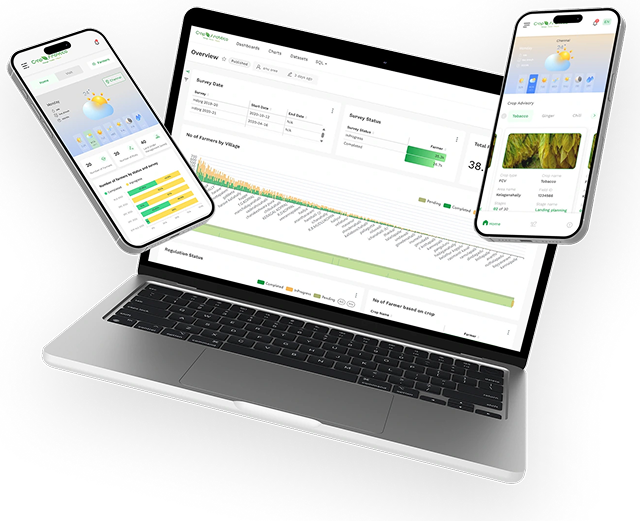
The combination of automated reporting, real-time dashboards, and centralised records didn’t just tidy up their data. It also gave their field teams simple, practical insights they could use every day to manage their farms more effectively and move steadily toward their wider sustainability goals.
Crop Analytica ensures data accuracy by utilizing real-time monitoring, automated data collection, and remote sensing technologies. By integrating IoT-based farm monitoring and sustainability evaluations, the ESG Reporting Software successfully eliminates manual errors. Furthermore, it conducts automated cross-verification of ESG metrics to preserve data integrity and comply with global sustainability standards.
- EUDR (European Union Deforestation Regulation): Ensures deforestation-free supply chains.
- Global G.A.P. & ALP: Tracks ethical sourcing and sustainability compliance.
- Corporate ESG Compliance: Our ESG Reporting Software delivers sustainability data that are suitable for audits.
- Other International and Local Regulations: Assists agribusinesses in adhering to changing sustainability requirements.
Crop Analytica’s ESG Reporting Software uses IoT sensors, satellite imaging, and farm-level activity tracking to continuously monitor sustainability performance. The live dashboard provides up-to-the-minute insights on water usage, carbon emissions, and labor compliance. Compliance alerts notify agribusinesses of possible risks, helping them to proactively implement corrective measures.
Yes, Crop Analytica simplifies certification by automating compliance documentation and report generation. With pre-assembled templates that align with ESG, EUDR, and sustainability certification mandates, the ESG Reporting Software assists businesses in easily preparing audit-ready reports without the need for extensive manual effort.
By ensuring transparent supply chain documentation and adherence to global ESG standards, Crop Analytica helps agribusinesses gain eligibility for premium markets. Compliance with verified ESG guidelines elevates brand reputation, enhances consumer confidence, and attracts investors who are interested in sustainable agriculture.
Yes, the platform consistently updates compliance standards, delivers regulatory notifications, and monitors new ESG developments. Through automated reporting and real-time ESG monitoring, companies can proactively respond to regulatory shifts, thereby securing long-term sustainability and maintaining a competitive edge in the market.