The Rise of Drone-Driven Agriculture: Smarter Fields, Better Yields
What Is Sustainable Farming and Why Does It Matter
Agriculture is the bloodstream of India, it's still the primary source of employment for a large part of the population and the main supplier of food for the country with its 1.4 billion inhabitants. One of the major disadvantages of conventional farming is that it causes the degradation of soil, water runoff, and increased emissions of greenhouse gases. More so, Sustainable Farming Practices is a wiser choice where production and preservation are balanced, thus making farms sustainable for future generations.. It means cultivating crops in an effective way without damaging the soil, wasting water, and minimizing negative effects on the ecology. For Indian farmers, agribusinesses, and Farmer-Producer Organizations (FPOs), this approach helps pressing issues like erratic monsoons and global market demands.
Crop Analytica software allows Indian farmers, agribusinesses, and Farmer-Producer Organizations (FPOs) to opt for practices without a hitch, through AI, IoT and data analytics, to boost yields by up to 25% without increasing resource waste. Let’s explore why sustainability is critical and how Crop Analytica makes Sustainable Farming Practices achievable.
The Need for Eco-Friendly Farming in Modern Agriculture
India farmers are under growing pressures as climate change causes extreme weather patterns. Around 60% of agriculture is still dependent on highly variable rainfall emphasizing Sustainable Farming Practices.
The degradation of the soil has affected 147 million hectares, the Sustainable Farming Practices fertility has been lowered and the area is being forced to use costly fertilizers.
Water shortage is a major concern:
- As sustainable farming practices Indian agriculture depends heavily on freshwater.
- On average, 50% of farmers contend with irrigation shortages.
These problems are putting food security at risk,and Sustainable Farming Practices can help India increase food production by 60% until 2050 in order to feed the population.
International regulations such as the EU Deforestation Regulation (EUDR) are adding up more difficulties for the farmers.
- Supply chains have to prove that they are not involved in deforestation in order to be eligible for exports.
- Non- sustainable activities will make it difficult to access the global market and make a profit.
Crop Analytica's tools address these issues by providing sustainable farming practices with real-time statistics that help them make the most of their resources and remain compliant. Such a sustainable farming practices keeps farmers competitive and eco-friendly.
Important Principles of Eco-Friendly Farming
Sustainable farming practices is fundamentally rooted in the ideas of living harmoniously with the natural environment:
- Agriculture requires nutrient-rich soil: Two organic methods to enrich the soil are growing cover crops and composting. These Sustainable farming practices methods can reduce the fertiliser cost by 15% to 20%. Farmers can employ Crop Analytica's soil sensors to know in real-time the nutrient levels which then help them in fixing the soil in an eco-friendly way.
- Water efficiency: Sustainable Farming Practices ensure Water is getting scarce and drip irrigation is able to use only one-third of the water. Our smart agriculture system enhances irrigation efficiency, ensuring that crops receive the right amount of water.
- Diversity with Crop Rotation: The use of crop rotation such as millets and pulses not only prevents the soil from erosion but also keeps pests from accumulating. Our software monitors crop cycles and offers the best ways for rotating them.
- Less Dependency on Chemicals: The reduction in the use of pesticides would be beneficial for the environment and result in money saving.
These values are compatible with the diverse agricultural terrain of India, whether it is the wheat in Punjab or the tea in Assam, to make it viable in sustainable farming practices for a long time.
Top Eco-Friendly Farming Practices Farmers Should Adopt
Indian farmers and FPOs can implement these five practices using Crop Analytica’s technology:
- Organic Farming: Farmers use natural fertilisers such as manure or vermicompost to reduce chemical runoff and improve the soil's microbiome. Organic crops sell for 20 percent more on the export market to allow certifications such as NPOP (National Programme for Organic Production).
- Precision Agriculture: Applying inputs only where needed saves resources and increases yields. Our Precision Agriculture Technology uses satellites and the Internet of Things to monitor crop health supporting Sustainable Farming Practices. This allows farmers to reduce the chemicals they put in fertilizers by 15% and increase the productivity.
- Integrated Pest Management (IPM): IPM is a method that uses natural pest controls, for example, ladybugs and very few chemicals for more Sustainable Farming Practices
- Renewable Energy Use: The use of solar pumps and biogas plants is a good way to cut fuel costs and emissions. We have a software that can be integrated with the solar system to optimize energy consumption for irrigation and machinery, thus, it can result in energy bills being lowered by 25%.
- Agroforestry: Trees planted with crops also enhance the beneficial effects of soil, carbon sequestration, and additional income from fruits or timber. With the help of the mapping tools offered by Crop Analytica, one can create the most efficient layouts for agroforestry.
Benefits of Eco-Friendly Farming
Adopting these practices yields significant rewards:
- Environmental Restoration: Healthier soils and reduced chemical use revive ecosystems. As an example, organic agriculture increases the carbon content of the soil by 10 percent, which enhances biodiversity, such as bees, which pollinate 75 percent of crops. The traceability tools of Crop Analytica ensure adherence to environmentally friendly standards.
- Long-Term Profitability: Sustainable crops command premium prices—organic rice farmers in Tamil Nadu earn 20% more in EU markets. Our ESG reporting tool is aimed at making the certification process less time-consuming and thereby easing the entry into the market.
- Good Yields with Lesser Input: Purity methods have shown that they can efficiently use the necessary inputs, as the yield increases by 20-25% while the water and fertilizer usages are halved. A Maharashtra FPO using our Smart Agriculture System has reported to us a 30% reduction in the cost of operations.
How Technology Is Driving Eco-Friendly Agriculture
Technology continues to change green farming in a major way and makes it both cheaper and more efficient:
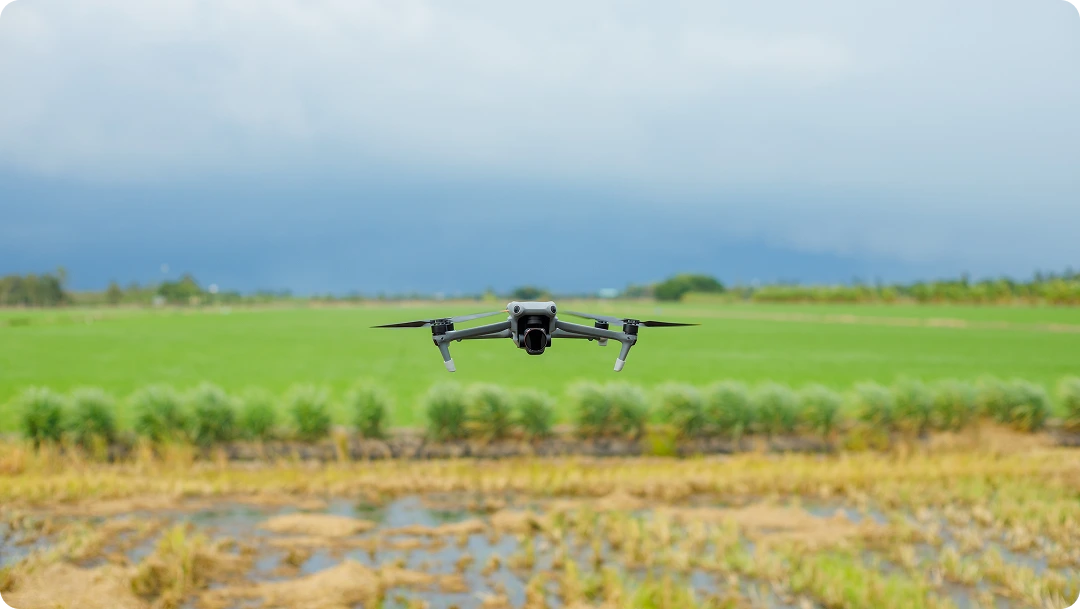
- Drones and IoT: Drones mapping fields, they can spot those areas where the field might be suffering from a lack of water or pests, while IoT sensors take care of soil moisture. Crop Analytics’s Drone Technology in Farming will be the reason for a 15% input saving by means of just targeting the problem areas.
- Smart Irrigation and Soil Sensors: Automated irrigation sprinklers that can water precisely, saving up to 20% strengthening Sustainable Farming Practices. Crop Analytica’s sensors give real time data, which helped farmers in Gujarat to reduce their water consumption by 15 percent.
- Data-Driven Decisions: AI examines weather, soil, and crop data and provides personalized advisories, such as the time-optimal planting is forecasted with our platform, and the yield increases by 10%.
Throughout the years, agriculture has transitioned from dependence on chemical-intensive methods to the integration of more sustainable farming practices that utilize advanced technologies. The introduction of IoT Based Agriculture Monitoring Systems has revolutionized resource management for farmers, enabling the application of precision farming techniques.
Challenges in Implementation and How to Overcome Them
Sustainable Farming Practices also faces some problems. However, these are the problems that Crop Analytica has solved.
- Pricey at the Beginning: Technology, such as drones or solar panels, can be costly. The answer is to take advantage of government subsidies, such as PM-KUSUM for solar pumps or FPO grants for our shared technology.
- Skill Gap: Many farmers have low technological skills. The solution is Crop Analytica’s mobile-first apps that have easy-to-follow advisories, while we create partnerships with NGOs so they can provide the farmers hands-on training.
- Education Gap: It's very common for farmers to be hesitant to change. One of the ways to solve the problem is by showing successful cases, for instance, a FPO in Karnataka which has been able to double its exports by using our ESG tools through community workshops.
The Future of Eco-Friendly Agriculture: Constructing a Better Future
Sustainable farming is becoming a shared global movement, with the UN’s SDGs, the EU’s Green Deal, and India’s NMSA and FPO networks all pushing for healthier land and better livelihoods. ICAR estimates that together, these efforts could restore 15 million hectares of degraded soil and cut farm emissions by 20% by 2030—real progress that farmers can fee
Crop Analytica is part of this change, helping farmers with simple, practical tools like EUDR-ready traceability and AI-backed yield predictions. Imagine every Indian farm thriving with smart tech and clean energy. That future starts with all of us. Ready to grow? Reach out to Crop Analytica or follow us on X.