Agriculture has evolved a great deal from the times when farmers counted on the weather and their instincts alone. Now, technology fills the gap like a trusted sidekick, making crop management intelligent, efficient, and much less stressful.
Imagine turning unpredictable challenges like erratic rains or soil issues into manageable problems with just a couple of swipes on a smartphone. That is the value of modern agri technology. In this piece we look at the ways innovation is reshaping farming, from the planning stage through to harvest, and how the tools built by Crop Analytica lift yields while keeping the process sustainable.
Targeted crop management
Modern farm technology relies on precision agriculture, which involves the application of tools such as GPS, drones, and satellite imagery. They are integral parts of high end crop monitoring systems, and they give the farmer pinpoint accuracy.
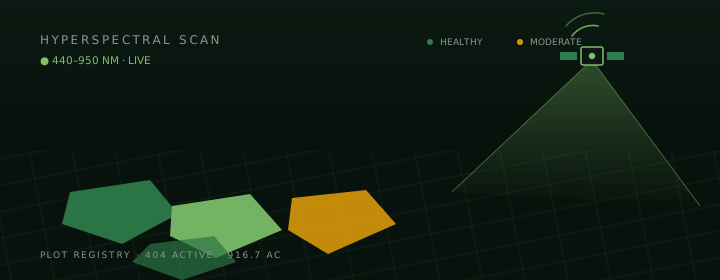
Farmers are now able to map their fields, track soil health, and identify problem areas. A good example is drones with multispectral cameras, which can detect crop stress and guide irrigation or fertiliser to specific regions. This brings waste down to a minimum, and crops receive what they need, when they need it.
IoT insights
The IoT has taken farming technology to the next level. Smart sensors placed on fields sense soil moisture, temperature, and nutrient concentration in real time. These devices exchange data with cloud based systems, and this information can be accessed by farmers on their smartphones. With that analysis, farmers optimise irrigation schedules, prevent unreasonable fertiliser use, improve crop condition, and avoid wasting resources.
Predicting the perfect harvest
Farming technology has gradually integrated AI and data analytics capable of significantly improving a farmer's decisions. Sophisticated yield prediction software is built on AI powered platforms. The software forecasts yield and suggests optimisations by comparing historical and real time data such as weather trends, crop performance, and market movement. This forecasting skill helps farmers beat risk, for example by planting crops less vulnerable to the coming weather, resulting in higher yields and stronger returns.
Farming on autopilot
Modern agricultural technology has been automating labour intensive work with self driving tractors and robotic harvesters. Machines with AI can plant seeds, apply fertilisers, and harvest crops with minimal human involvement. This saves time and labour, reduces human error, and enables farmers to manage more land.
Growing green through tech
Sustainability is also advanced by farming technology. Tools such as variable rate application systems allow only the necessary quantities of fertilisers and pesticides to be applied, reducing environmental impact. Innovations such as vertical farming and hydroponics, powered by automated climate control, allow all region production using less water and land.
The next generation of farming
The use of technology in agriculture is not yet fully integrated. New technologies, such as blockchain for supply chain monitoring and gene editing for resistant crops, are arriving. With the adoption of modern technology, farmers are not only managing crops better but also building a more sustainable future.
Agricultural technology is transforming the field by making it more precise, efficient, and sustainable. As these technologies keep developing, farmers are better placed to meet the needs of an expanding world without depleting the resources of future generations.